
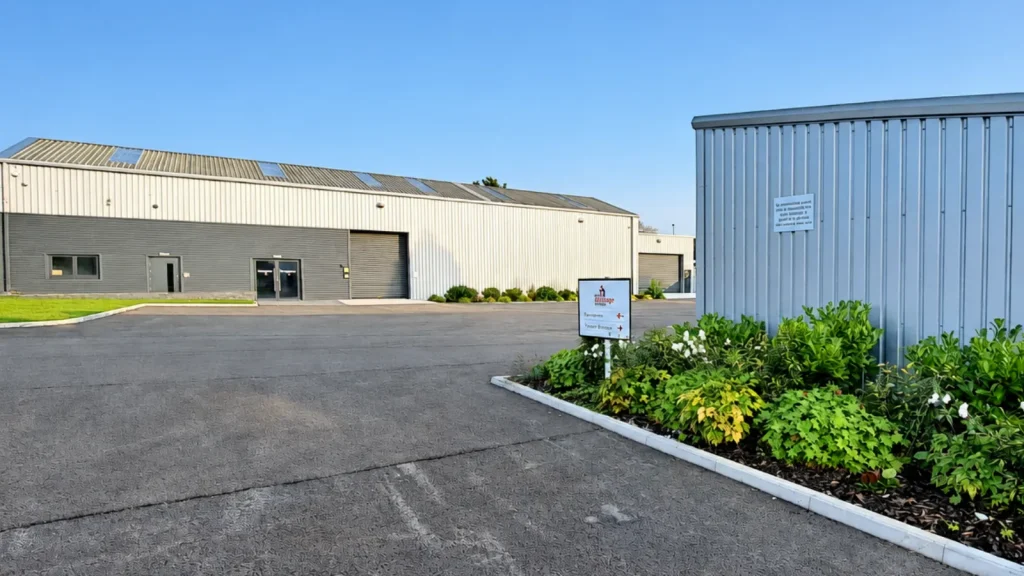
Commercial cladding plays an important role in both the appearance and performance of a building. Beyond creating a professional external finish, a correctly specified and installed cladding system can help protect the building from the elements, contribute to thermal performance and support long-term durability.
For property owners, developers and facilities managers, understanding the available systems and their maintenance requirements is an important part of making informed decisions.
What Is Commercial Cladding?
Cladding is an external covering installed on a building to provide protection and enhance its appearance.
Commercial cladding systems are commonly used on industrial facilities, warehouses, offices and other commercial properties.
Depending on the building’s requirements, systems may include:
- Single-skin metal cladding
- Twin-skin cladding systems
- Composite panels
- Traditional metal finishes
- Rainscreen and façade systems
Each solution offers different characteristics, making appropriate specification essential.
The Benefits of a Well-Designed Cladding System
A suitable cladding system can provide several important benefits.
Weather protection: External cladding helps protect the underlying building structure from exposure to wind, rain and other environmental conditions.
Thermal performance: Certain cladding assemblies can contribute to improved insulation and overall building energy performance.
Durability: Correctly specified materials and professional installation can support long-term performance and reduce the risk of premature deterioration.
Appearance: A wide selection of materials, colours and finishes allows building owners to achieve a modern, professional exterior.
Understanding Rainscreen Cladding
Rainscreen systems use an external cladding layer with a cavity behind it, designed to help manage moisture and support ventilation.
When correctly designed and installed as part of a complete façade assembly, these systems can offer effective weather protection and an attractive architectural finish.
However, material selection, fire performance, structural requirements and compliance considerations must be assessed for each individual building.
Why Installation Quality Matters
Even high-quality materials can underperform if they are incorrectly specified or installed.
Cladding projects require careful consideration of the supporting structure, fixing methods, weatherproofing details and interfaces with other building elements.
Working with experienced specialists can help ensure that these considerations are addressed throughout the project.
Maintaining Commercial Cladding
Cladding systems should be inspected periodically to identify signs of damage or deterioration.
Potential issues include loose or damaged panels, deteriorating seals, corrosion and damage around openings or connections.
Early identification allows appropriate remedial work to be considered before problems become more extensive.
How Salt Town Contractors Can Help
Salt Town Contractors provides specialist commercial cladding and rainscreen solutions across the UK.
Our team supports clients with technical advice, system selection and solutions tailored to the performance, safety and appearance requirements of individual buildings.
From new installations to refurbishment projects, we focus on delivering reliable, practical solutions.
Planning a commercial cladding or façade project?
Contact Salt Town Contractors to discuss your requirements and explore suitable solutions for your building.